Problem: Child Hunger in New Mexico
In New Mexico, the devastating reality of child hunger has persisted for years. One out of every four children in the state experiences food insecurity. The COVID-19 pandemic worsened the situation, with the number rising to one in three children (162,960), and in rural areas, it affected as many as one in two children. New Mexico Appleseed has been at the forefront of combating this crisis, tirelessly advocating for systemic change to ensure that no child goes hungry in our state.
Through groundbreaking initiatives like the Universal Free School Meal program, we have expanded access to free breakfast and lunch for 70,000 additional students across New Mexico. Our efforts also led to the elimination of reduced-price copays for school meals, making free meals accessible to 12,000 more children. By working closely with schools, districts, and policymakers, we continue to advocate for and implement programs that ensure consistent and healthy meals for children, particularly those in low-income and rural communities.
As we move forward, New Mexico Appleseed remains committed to addressing the profound food insecurity many families face. We partner with state agencies, schools, and nonprofits to expand innovative programs like Breakfast After the Bell and summer meal waivers. Our work is guided by a vision where every child in New Mexico has access to the nutritious food they need to grow, learn, and thrive, regardless of their family's economic circumstances. Together, we are making a lasting impact on child hunger in New Mexico.
New Mexico Appleseed’s Solutions
New Mexico Appleseed has been at the forefront of nearly every single child nutrition law in the state. We have created four state laws and two federal bills, one of which is being implemented at the USDA.
Appleseed’s Federal & STATE Legislation: Lunch Shaming
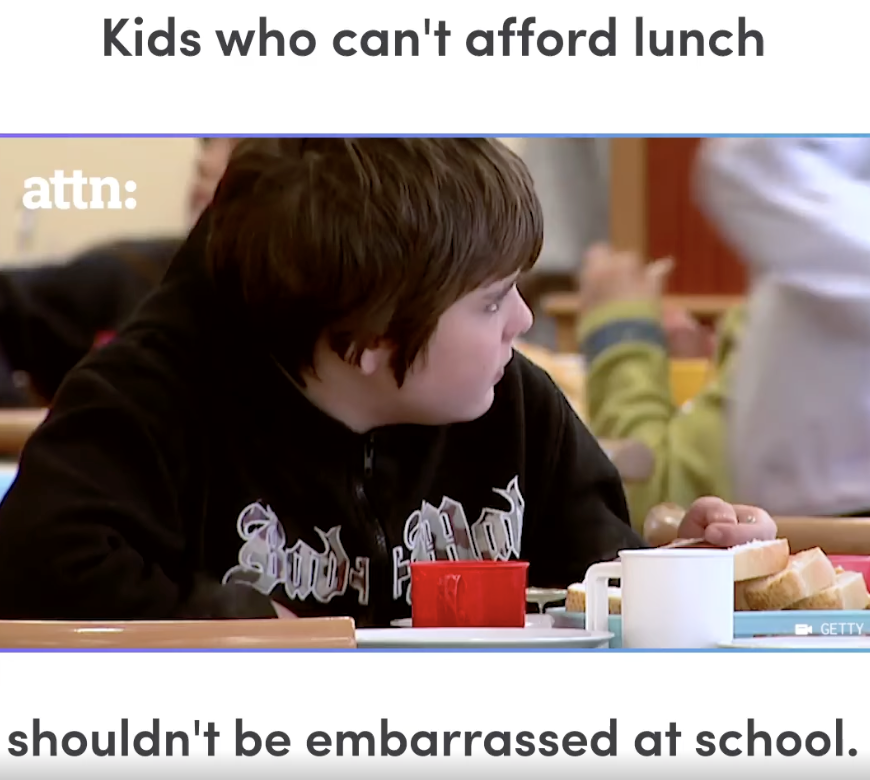
In 2017, thanks to Appleseed's work, New Mexico was the first state to ban the practice of lunch shaming. This landmark piece of legislation was quickly adopted by many other states and praised as commonsense law. However, not everyone sees it that way and the fight continues over holding a child responsible for school meal debt. Our Hunger Watchdogs monitor activities of the government and organizations alerting the public and writing legal memos when necessary to prevent the practice of lunch shaming. Together with local delegates, Appleseed is working to end these unethical debt-collection methods on a federal level. In the last year, our work has been gaining support as Congress revisits the Child Nutrition Reauthorization Act. Our staff has been working to ensure that lunch shaming becomes federal law—and a thing of the past.
This effort received international press coverage, including:
CNN, MSNBC, TODAY Show, NBC Nightly News, The Guardian, CBS Sunday Morning, NPR, New York Times, and Huffington Post.
NATION’S FIRST BREAKFAST AFTER THE BELL LAW
UNIVERSAL FREE SCHOOL MEALS
SNAP CrISIS RAPID RESPONSE
New Mexico is facing an unprecedented child hunger catastrophe. It is a perfect storm of furloughs, layoffs, soaring food costs, and the stoppage of Supplemental Nutrition Assistance Program benefits that are immediate threats to the health and well-being of children across our state. What is a clear humanitarian failure will quickly become educational and mental health failures, as well.
In response to the crisis, New Mexico Appleseed devised a rapid response, focused on using existing infrastructure to feed children and their families while increasing federal dollars going directly into communities.
WIC EXPANSION
New Mexico ranks first nationally in WIC eligibility, but lowest in uptake. This means that we have the highest percentage of pregnant people and young children who qualify for this federal nutrition program, yet the fewest actually accessing the program. Thousands of eligible pregnant women and parents with children ages 0-5 go without essential nutrition support despite qualifying for benefits.
Appleseed's WIC expansion strategy addresses multiple barriers simultaneously through three interconnected interventions.
Tribal Nutrition Improvement Act
Nationwide, one in three Native Americans lives in poverty due to low wages and unstable employment, and about three out of four live in a community that does not have a supermarket within one mile—unlike the rest of the nation, where it is about two in five. This makes it difficult for Native American communities to benefit from federal food programs such as Supplemental Nutrition Assistance Program (SNAP) and School Meals (Feeding America, 2021). Child nutrition programs should work to help sovereign Native Nations overcome barriers to ending food insecurity. Appleseed is leading the way with an innovative piece of legislation that will change the landscape of hunger plaguing Native communities.
This legislation received national news coverage in the New York Times.
Our Tribal Nutrition Improvement Act:
Ensures that tribal children, no matter where or with whom they live, will automatically receive free school meals.
Empowers Native communities to operate nutrition programs.
Ensures higher meal reimbursement rates.
Tracks Tribal meal patterns and economic development.
COVID Response
During COVID-19, the number of New Mexican children who experienced food insecurity increased to one out of every three, up from one out of four (162,960 children), and in many rural communities, the numbers are as high as one out of every two (Roadrunner Food Bank & Feeding America, 2020). In a state like New Mexico, where poverty and food insecurity has held a strong grip on many families prior to this outbreak, the fight to meet a family’s basic nutritional needs is even more profound.
Throughout the pandemic, Appleseed spearheaded feeding efforts together with school districts and state agencies to promote summer and after school meals.
Appleseed convened stakeholders, from teachers to the Governor, to solve difficult problems related to child hunger.
Our advocacy team created a state-wide task force, which included school districts, state agencies, national organizations, and the Governor’s office to open drive-through meal sites in every school district in New Mexico. For example, Appleseed worked in partnership with APS to create 89 drive-through meal sites throughout Albuquerque, resulting in 4,000,000 meals in the first three months of the COVID-19 outbreak. This win resulted from a blend of local coordination, legal research and state and federal advocacy.
Coordinated 15 large community events that helped more than 7,932 students, 2,500 parents, and served 1,800 food boxes and 8,500 school meals.
Appleseed partnered with over 60 different nonprofits, schools, and government agencies for our multi-pronged 1,2,3 Eyes On Me statewide events—and became first-in-the-nation to combine health screenings, oral and eye health services, food boxes, flu shots, mental health services, and COVID-19 vaccinations in a single location.
Directed statewide efforts to expand summer meal and after school meal sites during the pandemic.
As communities' feeding sites closed and Tribal communities remained under strict access, Appleseed got creative and created innovative feeding sites: meals were delivered on school buses to communities without feeding sites, pop-up-sites and after school meals were established to increase access to meals during the evenings.