Problem: The Foster Care Crisis Created by Fentanyl
Every year in New Mexico, hundreds of babies are born exposed to substances, and the Fentanyl crisis has made this problem exponentially worse. Fentanyl has fundamentally changed the substance use landscape. It's exponentially more potent than heroin and increasingly mixed into other drugs without users' knowledge.
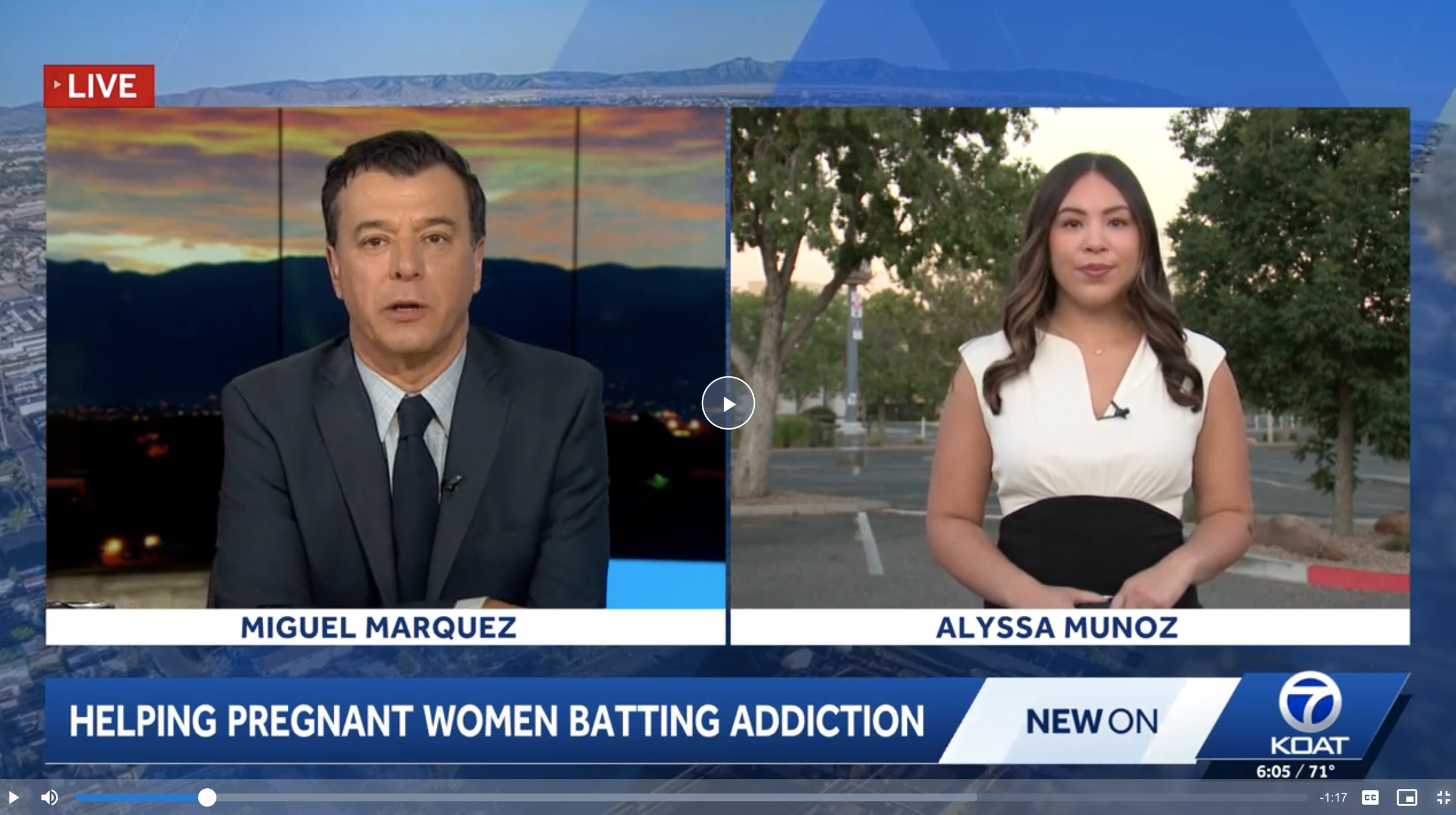
KOAT 7 Story: Helping Pregnant Women Battling Addiction
Parental substance use disorders represent a significant risk factor for child maltreatment that cannot be ignored. In New Mexico, at least 49 infants and children who were born substance-exposed have died since 2019. At the same time, research consistently shows that children achieve better outcomes when they remain with their biological parents, even when those parents struggle with substance use disorders.
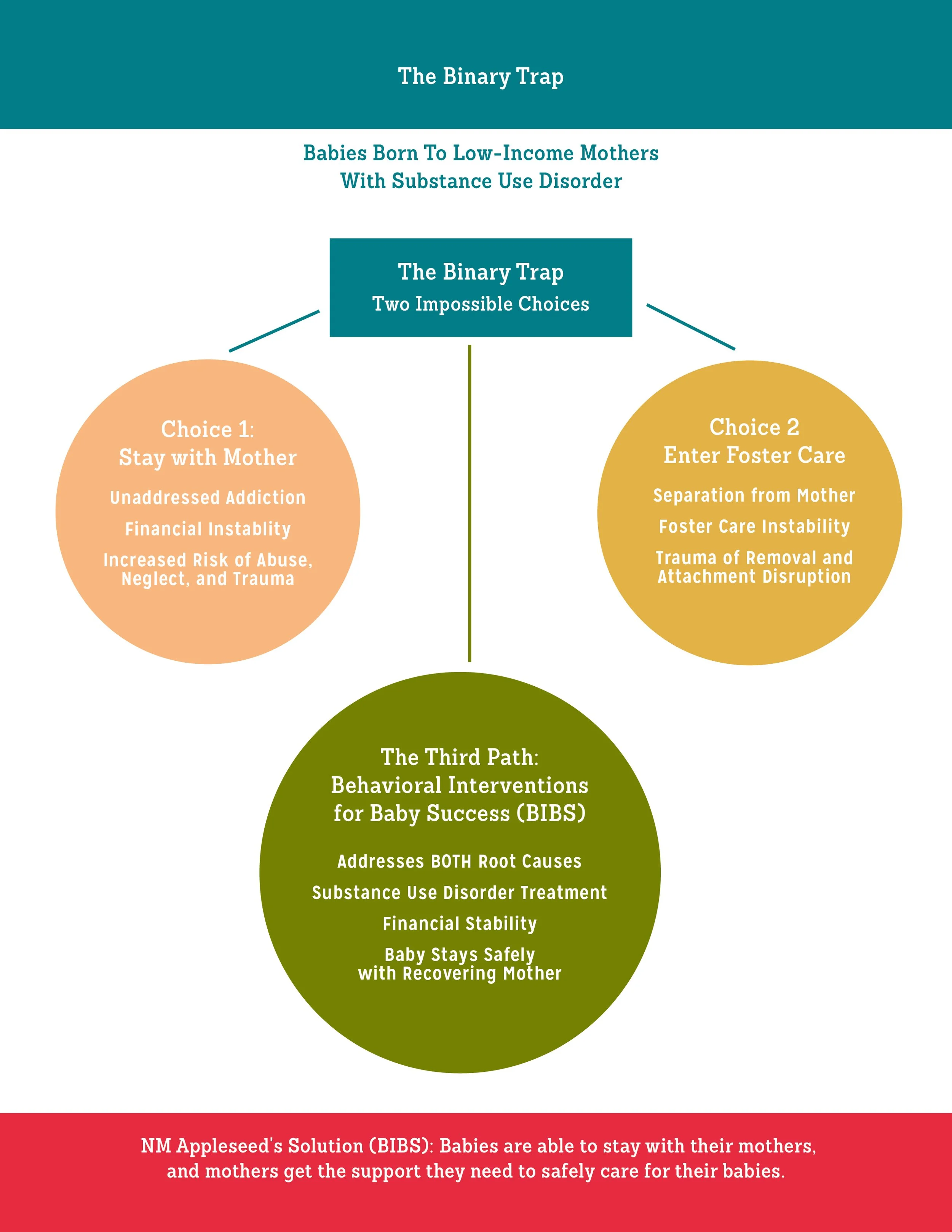
Babies born exposed to substances are caught in a dangerous and stark binary trap: Either remove infants to foster care (causing trauma, poor developmental outcomes, and family separation) or leave babies with actively using mothers (risking neglect, abuse, or death). Neither option serves children or families well.
New Mexico Appleseed decided to find a solution to this cruel dichotomy of choices.
NM Appleseed's Solution Design Process
Appleseed uses a combination of community-based participatory research, academic research, and a team of issue area experts to co-create interventions.
Lived Experience Design Team: Appleseed's design process for finding a solution began by convening mothers who had given birth to substance-exposed infants. These women with lived experience form our core design team, meeting regularly to share their experiences with the child welfare system, substance use treatment, and the daily realities of trying to parent while struggling with addiction. They have the final say in every substantive decision.
Academic Research: Decades of research has been done in the economic arena of cash transfers (the provision of money with the freedom to spend it as the recipient wishes) and the medicine arenas of addiction treatment.
The addiction medicine intervention is called "contingency management" and involves immediate positive reinforcement with something desirable as a small treat or even a raffle ticket. That is a simple behavioral intervention, but it works. Cash transfers, on the other hand, are focused on the provision of cash for the purpose of meeting basic needs and give the recipient complete agency over how the money is spent.
The research pointed us to the need for a novel intervention to address both the addiction and the poverty that compound maltreatment risk, but no one had combined these two disciplines to create a unique intervention that closes that binary trap.
Medical Expert Design Team: We partner with physicians at UNM Health Sciences Center's Milagro and FOCUS clinics to better understand how they treat these issues of addiction in pregnancy and what their observations and experiences are. Milagro serves pregnant women with substance use disorders, providing comprehensive prenatal care integrated with medication-assisted treatment. FOCUS is the next step after Milagro family practice clinic.
These healthcare providers understand that traditional approaches are failing and are eager to contribute to and pilot new interventions.
NM Appleseed’s Solution:
Behavioral Incentives for Baby Success (BIBS)
BIBS solves the binary trap of having to choose between the baby being removed to foster care because of mom's use or staying with mom and risking increased abuse or neglect because of her use. BIBS addresses both the addiction and the poverty risk factors for moms early in pregnancy to increase the likelihood of healthy moms and babies staying together.
BIBS demonstrates a paradigm shift from punitive approaches (threat of removal to force compliance) to supportive interventions (providing resources that enable success). This shift aligns with growing national recognition that punishment-driven approaches to addiction often don't work and push deeper into poverty and addiction at the earliest moment families most need support, not more failures requiring punishments.
The BIBS Intervention: The BIBS pilot begins in 2026 at the UNM Health Milagro clinic. There will be approximately 15-20 participants, and the focus will be on fentanyl using women in their first trimester. Participants will receive $225 per event contingent on negative drug screens or treatment compliance. The program continues through pregnancy and 12 months postpartum, addressing both addiction during pregnancy and the high postpartum relapse period.
The pilot will rigorously evaluate outcomes including child welfare involvement rates, substance use patterns, birth outcomes, and maternal and infant mortality. NMDOH will handle evaluation, allowing Appleseed to focus on technical assistance and program refinement.
If the pilot succeeds, Appleseed will work to scale BIBS statewide, potentially serving hundreds of families annually and dramatically reducing infant removals related to substance exposure. The program could become a national model for preventing child maltreatment through innovative combination of evidence-based interventions.
The BIBS program holds significant potential to improve early childhood outcomes for substance-exposed newborns while simultaneously reducing the likelihood of foster care placement. By providing financial support that enables access to critical services, promoting positive caregiver-child relationships, and stabilizing family environments, the program creates conditions that allow vulnerable infants to thrive. In states like New Mexico, where substance-exposed infants are a growing concern, the BIBS program could serve as a transformative model for improving the lives of these children and their families, leading to better long-term outcomes for both individuals and communities.

“I’VE LIVED THROUGH THE STRUGGLE OF BEING A MOTHER IN RECOVERY, AND I’VE SEEN HOW HARD IT CAN BE TO REBUILD WHILE CARRYING BOTH LOVE AND PAIN. THE BIBS PROGRAM GIVES MOTHERS THE TOOLS, COMPASSION, AND OPPORTUNITY TO TRULY TRANSFORM THEIR LIVES. I BELIEVE THIS PROGRAM WILL CHANGE COUNTLESS FUTURES—NOT JUST FOR WOMEN, BUT FOR THEIR CHILDREN AND ENTIRE COMMUNITIES.”
-MICHELLE MIRAMON-DURAN, CPSW SUPERVISOR,
DUKE CITY RECOVERY TOOLBOX
“THE BIBS PROJECT GIVES HOPE, SECURITY, AND FAITH TO MOTHERS EXPECTING A CHILD WHO ARE STRUGGLING, BUT MOST OF ALL, A FOUNDATION WITH BUILT-IN SUPPORT TO HELP THEM SUCCEED. AS A MOTHER WHO STRUGGLED WITH ADDICTION THROUGH A PREGNANCY AND CAME OUT IN THE END WITH NO ONE TO SHOW ME THAT LIFE COULD BE DIFFERENT, I AM PROUD TO HAVE BEEN A PART OF CREATING SOMETHING THAT MAY HELP SO MANY PEOPLE.”
-LUCIA ROTUNNO, CPSW
THE LIFE LINK, SANTA FE, NM
THE BIBS INTERVENTION
Prevent intergenerational trauma by supporting pregnant people to achieve substance abstinence and economic stability before birth, reducing the likelihood of child welfare involvement and improving life and health outcomes for both parent and baby.
• Target Population:
Pregnant individuals under 20 weeks of gestation who are active or recent fentanyl users
• Core Intervention:
$225 per week for weekly clean drug screens or treatment compliance
• Support Services:
Voluntary access to prenatal care, case management, and mental health support
(offered but not required for payment eligibility)
• Funding Status:
$450,000 pilot funding secured from the New Mexico Department of Health
• Implementation Sites:
Launching at UNMH Milagro and FOCUS clinics
• Evidence Base:
Combines proven contingency management approaches with economic
support to address both substance use and financial instability simultaneously