New Mexico Appleseed’s Multi-System Approach to Poverty
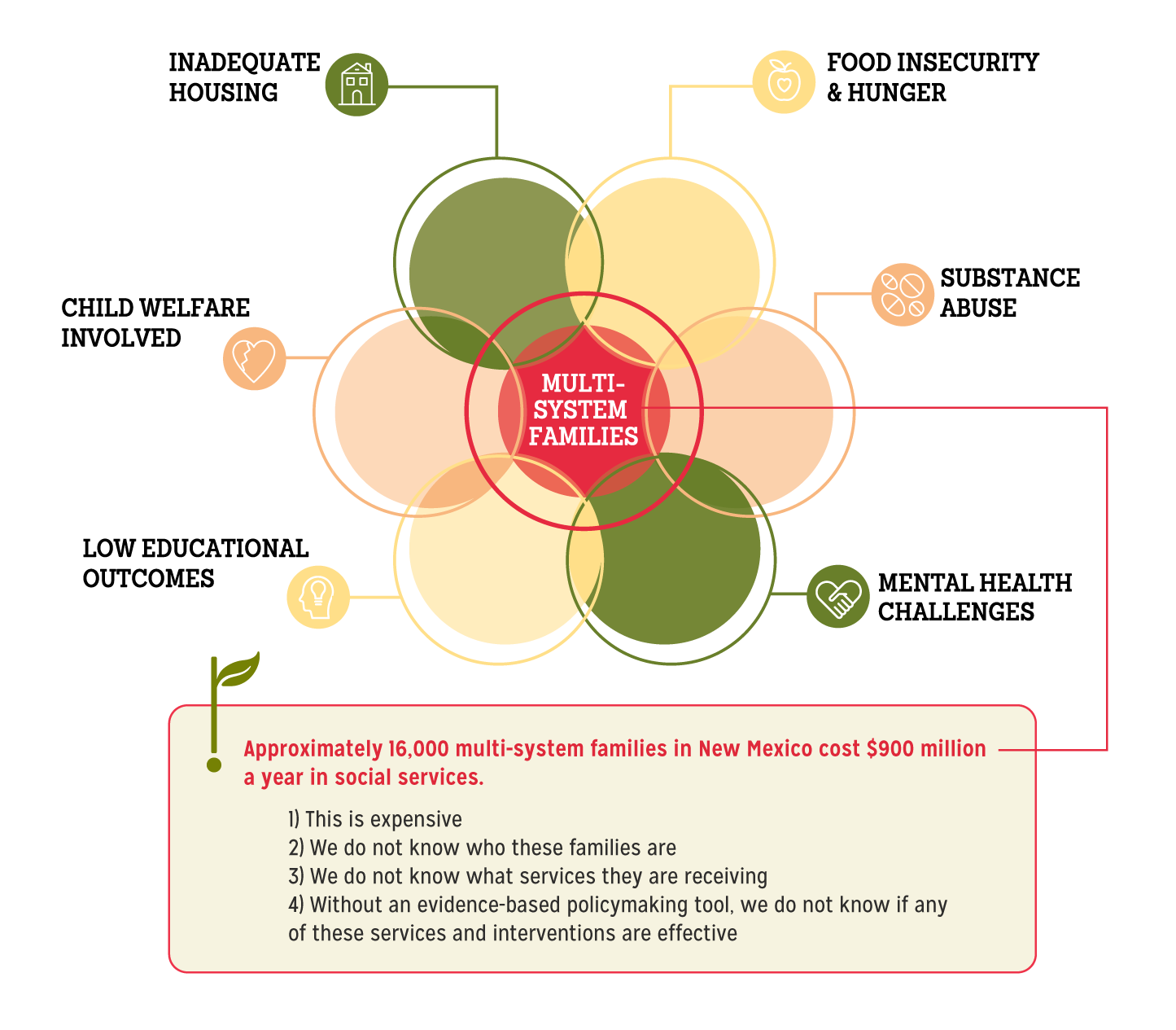
Vulnerable families need help across the systems and need systems to work together. New Mexico is not alone in treating problems blindly to their risk and protective factors. This means that despite all best and well-intentioned efforts by government and philanthropy, too many New Mexican families are unable to escape the inter-generational effects of poverty.
Ample research shows that many symptoms of vulnerable families are causal and/or correlated. For instance, a child's lack of stable housing is a risk factor for child neglect.
Food insecurity is a risk factor for low educational outcomes. The co: rrelations are too many to list, but critical to recognize if you want to understand and address the needs of New Mexico's most vulnerable families.
New Mexico Appleseed’s Theory of Change

New Mexico Appleseed corrects structural barriers to opportunity by designing and advocating for effective solutions to poverty through policy, legislative, and market-based reform. While many organizations offer important direct services—serve meals, educate children, and assist the poor—New Mexico Appleseed’s goal is to make systemic change that yields permanent or long term improvement on issues like hunger, homelessness, family economic security, child maltreatment and education.
New Mexico Appleseed designs, tests, and implements practical solutions that address the causes and consequences of poverty.
Our work addresses root causes, builds genuine partnerships, and operates at the systems level. New Mexico Appleseed is not creating temporary relief. It is providing permanent change in the systems that trap families in poverty. Our work can truly change the architecture that determines whether families succeed at all. We think New Mexico’s problems are not only solvable, but that the solutions are well within our reach.
New Mexico Appleseed’s Solutions
All of New Mexico Appleseed's work uses a multi-dimensional lens to address the complex root causes of poverty.
Guaranteed Payment for Attendance (GPA)
is the intervention that pays inadequately-housed students $500 a month to go to school, tutoring, turn in their homework and get social emotional support. We understand that it’s not just the housing that needs to be addressed, but the impact of all of that on getting a high school diploma. A high school diploma is one of the keys to having financial stability and escaping the cycle of poverty.
Behavioral InCENTIVES for Baby Success (BIBS)
addresses the intersection between pregnant moms addiction, poverty, and babies’ removal to child protective services. To save mom’s and babies from this fate, we must look to the whole person. We live across academic disciplines from medicine to address the addiction to economics to address the cycle of poverty.
WIC Expansion
is about understanding the behavioral economics behind why eligible families do not sign up for this benefit and what we can do to help them make that decision. One of the main factors is that eligible people cannot travel to clinics. As well, people who are pregnant don't always know they are pregnant in time to stop using substances. So, we need to find a way to connect pregnancy testing to benefits uptake. WIC participation doesn’t just support nutrition, it is also a protective factor for child removal at birth for substance use.
The Family Success Lab
at the New Mexico Department of Health: Appleseed’s creation to look across data silos to see what risk in protective factors for good and bad outcomes we can see in the data.